Yalda Night: Traditions, Food and Desserts for Shab-e Yalda
· 6 min read
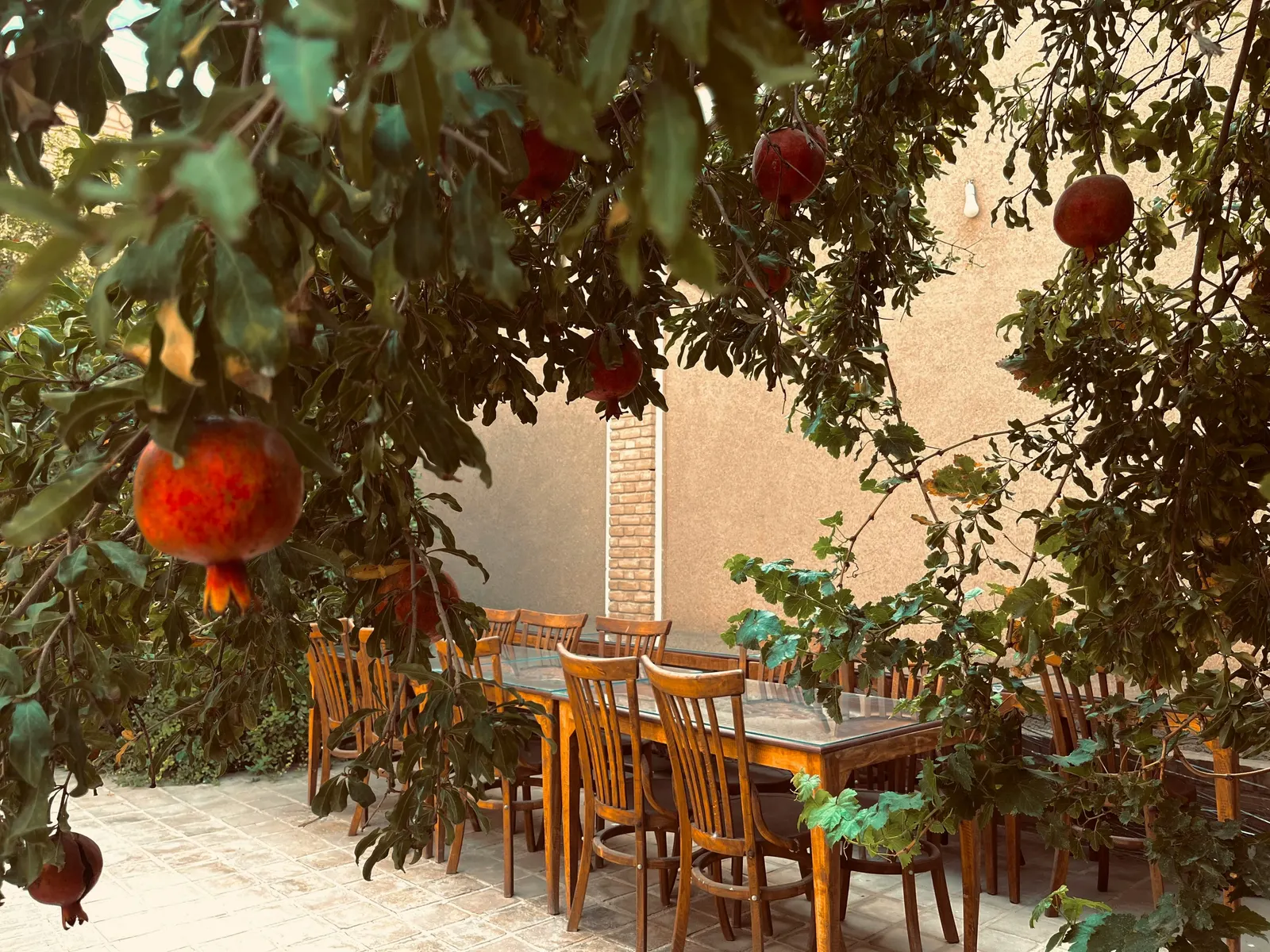
Yalda night (Shab-e Yalda, also called Shab-e Chella) is the Persian and Afghan celebration of the longest night of the year, held on the last night of autumn, around December 21. Families gather at the home of an elder and stay up late around a table of pomegranates, watermelon, nuts, dried fruit and sweets, reading poetry and telling stories until the long night passes.
In 2022, UNESCO added Yalda/Chella to its list of the world's intangible cultural heritage, on a joint nomination from Iran and Afghanistan.1 Here is what the night means, when it falls in 2026, the traditions and food that go with it, and how to bring a Persian dessert to your own Yalda table in New York.
What is Yalda night?
Yalda marks the turn from autumn to winter. It is a celebration of the sun and the warmth of life: after the longest night of the year, the days start growing again.1
The holiday has two names, and both are old. Yalda is a Syriac word for nativity or birth. In Islamic-era Persia, the night of the winter solstice, the last night of autumn, was known by that word as Shab-e Yalda, "the night of nativity."2
The other name, Shab-e Chella, comes from chella, a period of forty days. The night opens the "great chella," the first forty days of winter, which run from the first day of the Persian month of Dey (around December 22) to about January 30. A "small chella" follows: twenty days and twenty nights, which together also count as forty.3
Persian folklore turned the two chellas into brothers, Ahman and Bahman. During the four coldest days, where one chella ends and the other begins, they argue. The younger one mocks the older for not making winter cold enough. The older one answers that his brother can't do anything about it, because spring arrives right on his heels.3
The longest night didn't always get a warm welcome. Classical Persian poets mostly used Shab-e Yalda as an image of something long, dark and gloomy. The customs that make the night special lived on in ordinary homes, not in court poetry.2
When is Yalda night in 2026?
In 2026, the winter solstice falls on Monday, December 21,4 and Yalda is celebrated that evening. Because it follows the sun and the Persian solar calendar, Yalda lands on or right around December 21 every year, unlike Ramadan and the Eids, which move with the moon.
Yalda night traditions
The center of the night is family. Relatives gather at the home of an elder, around a table set with things that carry meaning: a lamp for light, water for cleanliness, and red fruits for warmth. There are games and music, and gifts for children, brides and new in-laws.1 After dinner, the older relatives tell tales and stories.3
The best-known pastime is fal-e Hafez, fortune-telling with the Divan of Hafez, the 14th-century poet of Shiraz. You make a wish, open the book at random, and read the poem that comes up as the answer. Folk wisdom says not to ask more than three times in one night, or the poet may get angry.3
A few other customs:
- Gifts for the engaged. Young engaged men send their fiancées a platter of seven kinds of fruit along with gifts, and in some places the bride's family sends gifts back.3
- Food as protection. The night is believed to be magically potent, and most of that magic runs through eating. In Khorasan, eating carrots, pears, pomegranates and green olives on Yalda is said to protect you from scorpion stings, and garlic from aching joints.3
Yalda night food
The Yalda table is built around red fruit: pomegranates, watermelon, beets, jujubes and grapes, all standing for warmth. Next to them go broth, sweets, dried fruits and nuts, made or saved for the occasion.1 In some regions, families aim to put forty different foods on the table.3
Watermelon in December
The most typical Yalda fruit is watermelon, kept from the summer just for this night. The belief is that eating watermelon on Shab-e Chella keeps you healthy through the next summer, protecting you from too much heat and the illnesses it brings.3
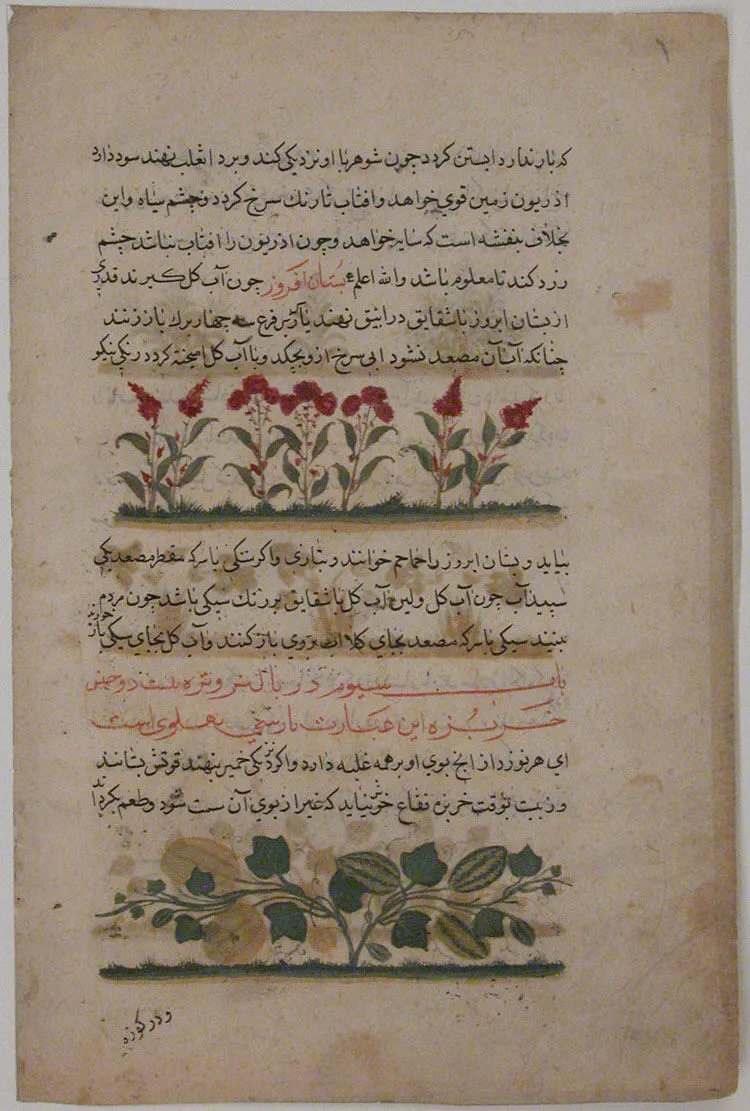
Purple amaranth and watermelon, a folio from a copy of Shahmardan ibn Abi'l Khayr's Nuzhatnama-i 'Ala'i, an encyclopedia first written in Iran around 1100. Public domain, via The Metropolitan Museum of Art.
Pomegranates
The pomegranate is the other fruit on nearly every Yalda table. Its deep red belongs to the same family of warm colors as the watermelon, beets and grapes around it.1 It's also one of the fruits in Khorasan's protective Yalda menu.3
Ajil: the bowl of nuts and dried fruit
No Yalda table is complete without ajil. It's a mix of nuts (pistachios, almonds and hazelnuts are the most common), roasted chickpeas, seeds such as watermelon and pumpkin seeds, and raisins and other dried fruits like apricots, sour cherries, mulberries and figs. Salty ajil may be seasoned with lime or sour grape juice. Sweet ajil, ajil-e shirin, mixes raw nuts with dried fruit and sugarplums.5
On the longest night, Iranian families gather and treat themselves to fruit, especially watermelon, and ajil. Ajil is also one of the gifts a groom-to-be sends his future bride.5
Yalda night desserts
There's no single required Yalda dessert. The sweets on the table are the ones a family prepares or saves especially for this night, served after dinner with the fruit and nuts.3
Ice cream isn't a traditional Yalda food, and we won't pretend it is. But nuts, fruit and ice cream have shared a Persian table before. The afternoon snack of the 19th-century Qajar king Naser al-Din Shah began with thirteen bowls of ajil, followed by fresh fruit, ice cream and tea.5
If you want a frozen dessert for your Yalda spread, these are the flavors that fit the night best:
- Bastani Sonnati. Iran's classic ice cream: saffron, crunchy pistachios and flakes of frozen clotted cream. The pistachios echo the ajil bowl. Read more in what is bastani sonnati.
- Saffron. Saffron-infused cream with a hint of rosewater. Here's the story of saffron.
- Shir Yakh. The Afghan classic of milk, sugar and cardamom, for a Shab-e Chella table.
A simple way to serve them: a scoop of Saffron or Bastani Sonnati with a spoonful of fresh pomegranate seeds on top, next to the watermelon and the ajil.
Shab-e Chella in Afghanistan
Yalda is just as much an Afghan holiday. In Afghanistan, it's known as Shab-e Yalda, Shab-e Chelleh or Shab-e Dijur, and it has been celebrated for a very long time. Poets and writers gather in literary circles to read their newest work, and families host parties with fresh and dried fruits and nuts. Pomegranates and watermelons go on the table as symbols of light. Readings from the Shahnameh, Ferdowsi's book of kings, are a common part of the night, and in recent years concerts have joined them. Many people stay up all night as a sign of light winning over darkness, and in some areas the next day is marked as the "day of return," when the days begin to grow longer again.6
That shared practice is why UNESCO listed Yalda/Chella for Iran and Afghanistan together, and why both countries keep it on their national heritage inventories.1 If you want to know how Afghans have made frozen desserts for centuries, read our history of ice cream in Afghanistan.
Celebrating Yalda night in New York
If you're hosting Yalda in New York this year, the fruit and nuts are easy to find. A real Persian or Afghan ice cream is harder. That's why we started Cold Flower: we're two brothers, born and raised in New York, who couldn't find it here and learned to make it ourselves. Read our story.
We make Bastani Sonnati, Saffron, Shir Yakh and our other flavors in small weekly batches, with 100% Halal ingredients. Order online for delivery across NYC and Long Island, or choose pickup in the East Village at checkout. Order a few days ahead so the pints are in your freezer before Monday night. Hosting a big family gathering? We can bring an ice cream cart to your party with our catering.
Frequently asked questions
When is Yalda night in 2026?
Yalda night 2026 is the evening of Monday, December 21. The winter solstice falls that day, and Yalda is celebrated on the last night of autumn, the longest night of the year.
What do you eat on Yalda night?
Red fruits, above all pomegranates and watermelon, along with ajil (mixed nuts and dried fruit), sweets and a family dinner. Jujubes, grapes and beets often join them, and in some regions families try to serve forty different foods.
Why do people eat watermelon on Yalda night?
Watermelon saved from the summer is the classic Yalda fruit. The old belief is that eating it on the longest night keeps you healthy through the heat of the next summer. Its red color also makes it a symbol of warmth, like the pomegranate.
What does Yalda mean?
Yalda is a Syriac word meaning birth or nativity, long used in Persian for the night of the winter solstice. The holiday's other name, Shab-e Chella, means the night that opens the chella, the first forty days of winter.
Is Yalda celebrated in Afghanistan?
Yes. Afghans celebrate Shab-e Chella with fresh and dried fruit, nuts, poetry and readings from the Shahnameh. UNESCO listed Yalda/Chella in 2022 as a shared heritage of Iran and Afghanistan.
Is Cold Flower ice cream halal?
Yes. Every Cold Flower pint is made with 100% Halal ingredients, so it can go on any Yalda table.
Taste it for yourself
Every pint is handmade in small batches with 100% Halal ingredients. When a batch sells out, it's gone until the next one.

Bastani Sonnati

Saffron

Shir Yakh
Sources
-
UNESCO, "Yaldā/Chella," Representative List of the Intangible Cultural Heritage of Humanity, inscribed 2022 (17.COM), https://ich.unesco.org/en/RL/yalda-chella-01877. ↩ ↩2 ↩3 ↩4 ↩5 ↩6
-
Anna Krasnowolska, "Sada Festival," Encyclopaedia Iranica, online edition, 2009, updated 2012, https://www.iranicaonline.org/articles/sada-festival. ↩ ↩2
-
Mahmoud Omidsalar, "Čella i. In Persian Folklore," Encyclopaedia Iranica, vol. 5, fasc. 2 (1990), 123–25, https://www.iranicaonline.org/articles/cella-term-referring-to-any-forty-day-period/. ↩ ↩2 ↩3 ↩4 ↩5 ↩6 ↩7 ↩8 ↩9 ↩10
-
U.S. Naval Observatory, Astronomical Applications Department, "Earth's Seasons and Apsides," 2026, https://aa.usno.navy.mil/data/Earth_Seasons. ↩
-
Manouchehr Kasheff, "Ājīl," Encyclopaedia Iranica, vol. 1, fasc. 7 (1984), 702–3, https://www.iranicaonline.org/articles/ajil-an-assortment-of-nuts-pistachios-almonds-and-hazelnuts-being-the-most-common-roasted-chickpeas-and-seeds-such-as/. ↩ ↩2 ↩3
-
ECO Cultural Institute, "A Report on Yalda Night Celebration in Afghanistan," December 27, 2021, https://www.ecieco.org/en/news/8254/A-report-on-Yalda-Night-celebration-in-Afghanistan. ↩