The History of Ice Cream in the Middle East, From Ice Pits to Bastani
· 6 min read
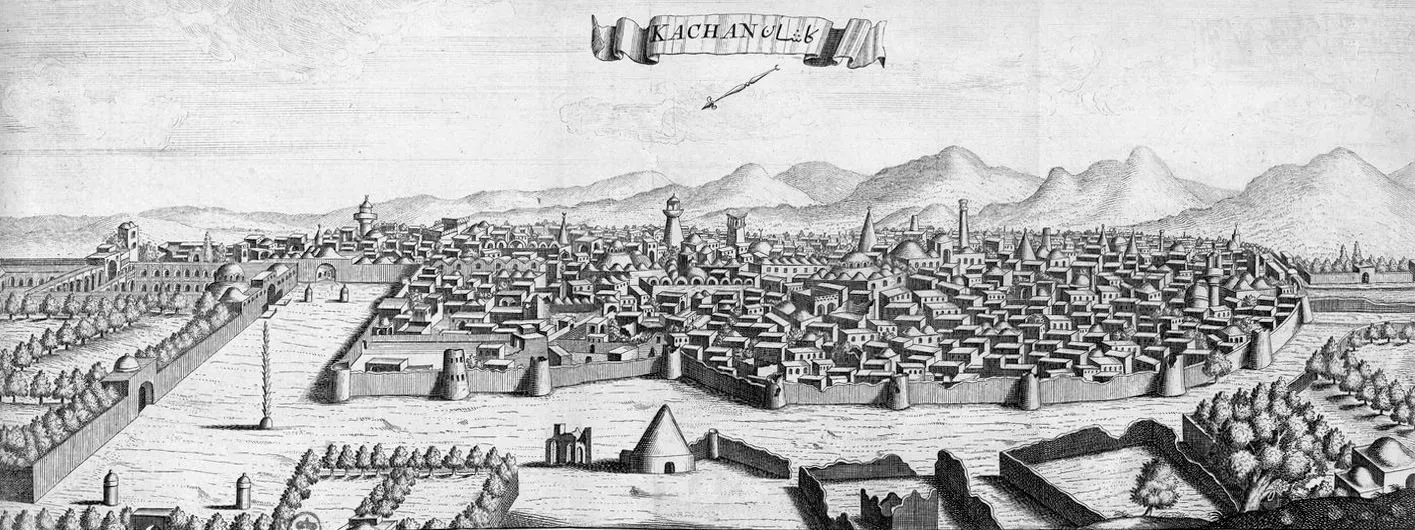
View of Kashan with a conical ice house in the foreground, from Jean Chardin's Voyages en Perse, drawn in the 1670s. Public domain, via Wikimedia Commons.
The history of ice cream in the Middle East is mostly a history of ice. For thousands of years, people from Syria to Iran stored winter ice and snow to chill drinks in the heat of summer, and those iced drinks, called sharbat, gave the world the words sherbet and sorbet. Ice cream as we know it came much later: Ottoman salep ice cream, the booza of Damascus and Tehran's saffron bastani all took their modern shape between the 1600s and the 1900s.
Here's that story, in order.
The history of ice cream in the Middle East starts with ice
The oldest record isn't Persian. It comes from Mari, a kingdom on the upper Euphrates in what is now Syria. A clay tablet from around 1780 BCE, now in the Louvre, records King Zimri-Lim founding an ice house in the town of Terqa. It's the first known mention of an ice house anywhere, and the ice was brought down from the mountains mainly to cool the king's wine.1
Iran built the ice houses that became famous. A yakhchal (literally "ice pit") was a store for blocks of ice made or gathered in winter and used in summer. Many came with their own ice-making pools. On frosty nights, workers poured a few centimeters of water into long, shallow basins, let it freeze, and poured another layer the next night, until the ice was about half a meter thick. Then they cut it into blocks and stacked them in a deep pit under a mud-brick dome. A tall wall along the south side of the pools kept the sun off, and the water usually came from a qanat, an underground canal.2
How old are they? Simple pits covered with straw and earth may go back to the first millennium BCE, but nobody knows exactly when they became the domed buildings we know. The surviving yakhchals mostly date from the Safavid period (1501–1736) or later, and the best early descriptions come from 17th-century European travelers. One of them, the French jeweler Jean Chardin, made the engraving at the top of this page; the cone in the foreground is an ice house outside Kashan. By then they were everywhere: Tehran had more than 80, and Isfahan more than 40.
So the popular line that "Persians invented ice cream in 400 BC" goes too far. What ancient Persia had was ice storage, iced drinks and chilled sweets like faloodeh, plus a remarkable piece of desert engineering. Ice cream came later.
Sharbat: the drink that named sherbet and sorbet
What people actually did with all that ice was make drinks. The Arabic verb shariba means "to drink," and sharba means "a drink." Persian borrowed it as sharbat, Ottoman Turkish turned it into şerbet, and English picked up "sherbet" from Turkish at the start of the 1600s. Italian took the same Turkish word and made sorbetto, which became French sorbet.3 "Syrup" comes from the same Arabic root, through sharab.
In Arabia, Turkey and Persia a sherbet was a flavored syrup, often fruit or flowers boiled with sugar, diluted with water and served cold with ice or snow stored from the winter. It was a drink, not a dessert. It was in 17th-century Italy that sorbetto came to mean a syrup frozen until it was slushy, the ancestor of sorbet.4
Snow for caliphs and sultans
Chilled drinks were a mark of wealth in the medieval Arab world too. The Umayyad rulers of Syria harvested snow from Mount Lebanon, and al-Hajjaj, their governor of Iraq, set up a regular trade that carried snow packed in salt to an ice house in Kufa.5
Egypt has no snow at all, so the Mamluk sultans (1250–1517) had it shipped in. Snow from the Lebanese mountains came by sea to Damietta and up the Nile to Cairo, and relays of camels carried it overland from Damascus. Over time the trade spread beyond the palace, and snow was sold in the streets of Damascus, Aleppo and Cairo. Villages around Mount Hermon kept supplying Damascus with snow until the mid-20th century, when electric refrigerators took over.
Ottoman sherbet and the rise of salep dondurma
The Ottomans turned this into an institution. A palace office supplied snow and ice to the court and to the city's tradesmen, run by officials called the karcıbaşı and buzcubaşı, and snow was packed into wells in the hills each spring and shipped to Istanbul.6 Sherbet sellers, with their glass jugs and cups, became a fixture of Ottoman street life.
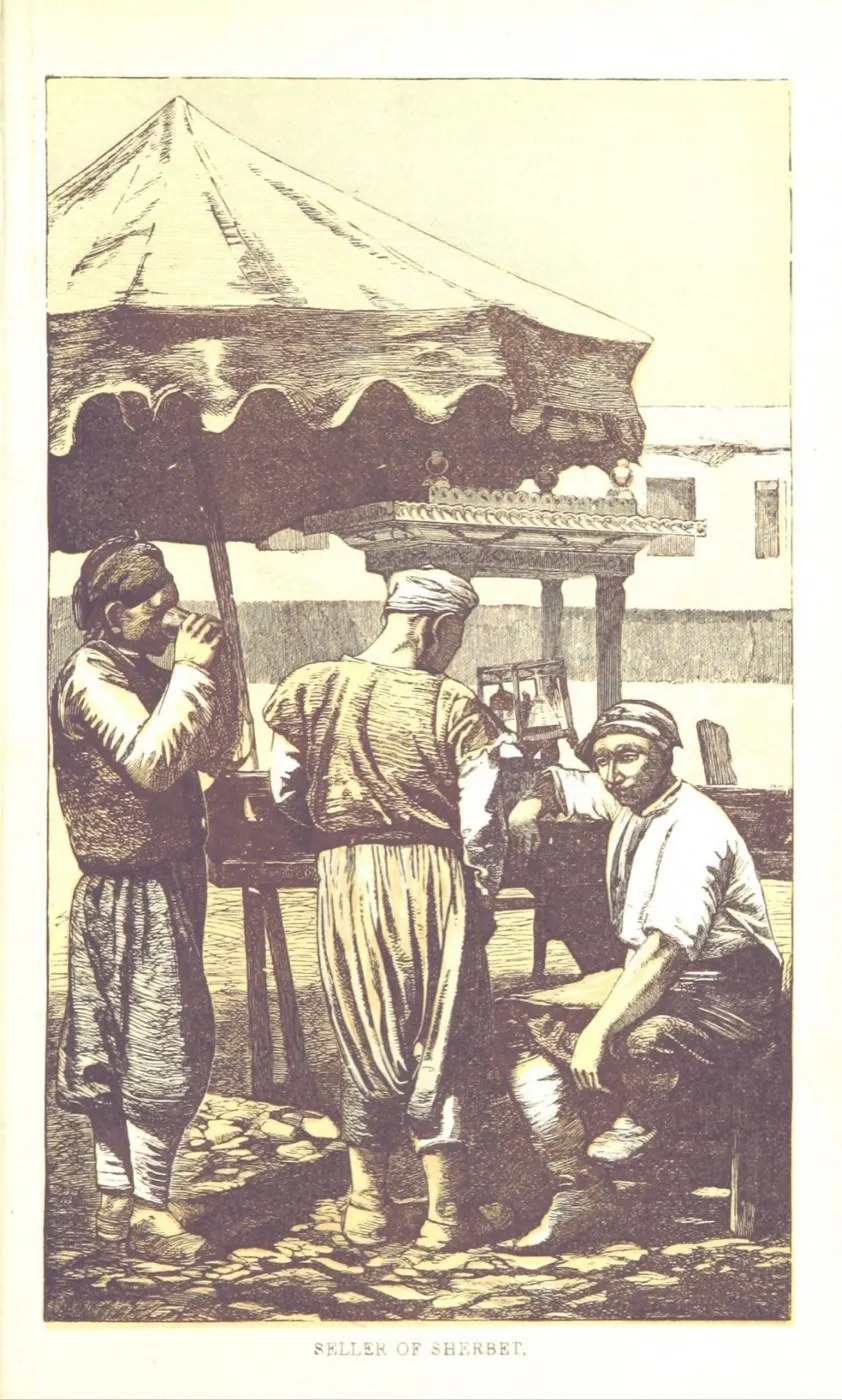
Seller of Sherbet, from George Walter Thornbury's Turkish Life and Character, 1860. Public domain, via Wikimedia Commons.
Frozen desserts followed. Ice cream became common in the Ottoman world in the 17th century, first made at home and in dervish lodges, then sold in the streets in summer, and it was served at court through the 18th and 19th centuries. Even then the drinks came first: in the early 1800s, sherbet sellers got the ice before ice cream makers did.6
The Turkish style that became famous is thickened with salep, a flour ground from the dried tubers of wild orchids. It makes the ice cream chewy, stretchy and slow to melt. Its home is Kahramanmaraş, in southern Turkey, where Maraş dondurması is made from goat's milk, sugar and salep from orchids growing around Ahır Mountain. Since 2018 it has been a registered designation of origin. The usual origin story, about a salep seller named Osman Ağa who buried a batch in snow, is told as a legend, and nobody can date the first salep ice cream exactly.
Damascus: Bakdash and booza
In 1895, Muhammad Hamdi Bakdash opened an ice cream shop in Damascus's covered Souq al-Hamidiyah. His booza was a milk and cream base flavored with mastic, a fragrant resin, thickened with sahlab (the Arabic name for salep), and pounded with long wooden mallets to give it stretch, then topped with pistachios. Run by the Bakdash family, the shop kept serving booza through the turmoil of the 2010s, and it's one of the oldest Arabic ice cream shops in the world.7
Before electricity, the family says, its ice came from snow gathered on Mount Hermon and kept in caves: the same mountain snow trade, lasting into the age of the ice cream parlor.
Tehran in the 20th century: Akbar Mashti and the spread of bastani
By the late 19th century, Tehran had street ice cream too. The photograph below, by the Iranian photographer Antoin Sevruguin (1851–1933), is titled "The Ice Cream Vendor" in the Smithsonian's archives, which date it to about 1890 and place it in Tehran's Drill Square.
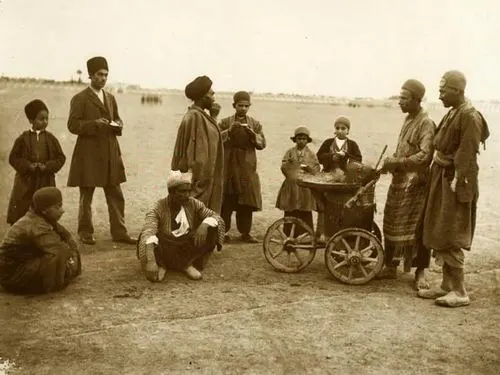
Ice cream vendor in Tehran, Antoin Sevruguin, about 1890. Public domain, via Wikimedia Commons.
The name most tied to Persian ice cream is Akbar Mashhadi Malayeri, known as Akbar Mashti, who came to Tehran from Malayer and opened one of the city's first ice cream shops. Exactly when is disputed: some say the late 1920s, near the railway station; others say 1941, on Rey Street, with a partner named Mohammad Reish.8 Either way, he's the one credited with the rosewater, saffron and flakes of frozen cream that define bastani sonnati today. In Tehran, saffron ice cream is still often just called akbar mashti.
What changed most in the 20th century was the cold itself. Iran's yakhchals stayed in use until the 1960s, when mechanical refrigeration reached most of the country,1 and Damascus gave up mountain snow at about the same time. Freezers turned these treats from a summer luxury into something any neighborhood shop could sell. The same shift played out next door in Afghanistan, which has its own story, told in our history of ice cream in Afghanistan.
The diaspora today
Emigrants carried these recipes with them. After the 1979 revolution many Iranians settled abroad, especially in Los Angeles, and rosewater and saffron ice cream went with them.
The ingredients have stayed remarkably constant along the way. Rosewater, saffron, pistachio, salep and mastic connect a Damascus booza, a Maraş cone and a Tehran bastani to drinks that were chilled with mountain snow centuries ago.
Getting Persian and Afghan ice cream in New York
We're two brothers, born and raised in New York, who couldn't find real Persian and Afghan ice cream in the city, so we learned to make it ourselves. Cold Flower is our small part of this long history, and every pint is 100% Halal.
We make Bastani Sonnati, Shir Yakh and our other flavors in small weekly batches. Order online for delivery across NYC and Long Island, or choose pickup in the East Village at checkout. Planning a wedding or a party? We also bring an ice cream cart to events through our catering.
Frequently asked questions
Who invented ice cream?
No single person or country did. People in the Middle East, China and Europe all stored ice and chilled drinks with it for centuries. Frozen, churned desserts appear gradually, and the Middle East's best-known ones, like Turkish dondurma, Syrian booza and Persian bastani, took their modern form between the 17th and 20th centuries.
What is the oldest ice cream shop in the Middle East?
Bakdash in Damascus, opened in 1895 in the Souq al-Hamidiyah, is often described as one of the oldest. It still serves booza, a stretchy ice cream thickened with salep and flavored with mastic.
What is traditional Middle Eastern ice cream made of?
Usually milk, cream and sugar, often thickened with salep (a flour from orchid tubers) and flavored with ingredients like mastic, rosewater, saffron or pistachio. Salep is what gives Turkish dondurma and Syrian booza their chewy, elastic texture.
Is traditional Middle Eastern ice cream halal?
The classic ingredients contain nothing haram, but commercial recipes can use gelatin or flavorings carried in alcohol, so check with the maker. Every Cold Flower pint is made with 100% Halal ingredients.
Where can I get Persian ice cream in New York?
Cold Flower makes Persian and Afghan ice cream, including Bastani Sonnati, in small weekly batches. Order online for delivery across NYC and Long Island, or choose pickup in the East Village at checkout.
Taste it for yourself
Every pint is handmade in small batches with 100% Halal ingredients. When a batch sells out, it's gone until the next one.
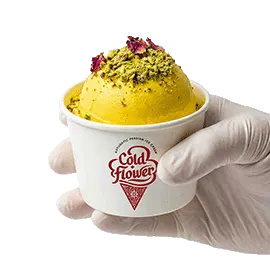
Bastani Sonnati
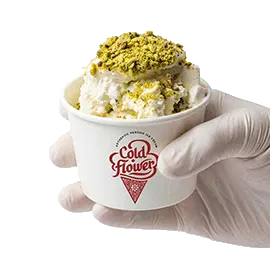
Shir Yakh
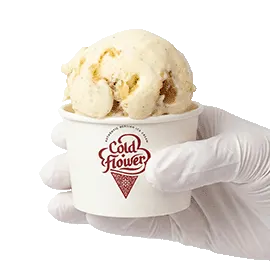
Baklava
Sources
-
Hemming Jørgensen, "Yakhchal," Encyclopaedia Iranica, online edition, 2012, https://www.iranicaonline.org/articles/yakcal. ↩ ↩2
-
Hosseini and Namazian, "An Overview of Iranian Ice Repositories, an Example of Traditional Indigenous Architecture," METU Journal of the Faculty of Architecture (2012), https://doi.org/10.4305/METU.JFA.2012.2.10. ↩
-
Victor Mair, "Sweet, Sweet Sherbet Drink (> Frozen Dessert)," Language Log, University of Pennsylvania, https://languagelog.ldc.upenn.edu/nll/?p=54861. ↩
-
Laura Mason, "Sherbet and Sorbet," in Encyclopedia of Food and Culture, ed. Solomon H. Katz (New York: Scribner, 2003), via Encyclopedia.com, https://www.encyclopedia.com/food/encyclopedias-almanacs-transcripts-and-maps/sherbet-and-sorbet. ↩
-
Paul Lunde, "The Iceman Cameth," Saudi Aramco World, May/June 1978, https://archive.aramcoworld.com/issue/197805/the.iceman.cameth.htm. ↩
-
Zeynep Özlü, "Notes on Ice Cream and Ice Cream Business in the Ottoman Empire," Erdem, no. 59 (2011), https://erdem.gov.tr/ozet/180/eng. ↩ ↩2
-
Michael Jansen, "Ice Cream Keeps Syrians Cool over 120 Years of Turbulent History," Irish Times, 2015, https://www.irishtimes.com/news/world/middle-east/ice-cream-keeps-syrians-cool-over-120-years-of-turbulent-history-1.2143164. ↩
-
"Man vāres-e bastani-ye Akbar Mashti hastam" [I am the heir to Akbar Mashti ice cream], Mehr News Agency, https://www.mehrnews.com/news/3914673/. ↩