What Is Bastani Sonnati? Persian Saffron Ice Cream, Explained
· 4 min read
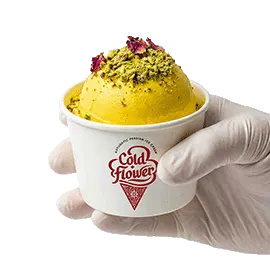
Bastani sonnati is Iran's traditional ice cream: a rich, golden custard ice cream flavored with saffron and rosewater and studded with pistachios. The name simply means "traditional ice cream" in Persian (bastani is ice cream, sonnati is traditional). Ask anyone who grew up with it and they'll describe the same thing: floral, warm, a little chewy, and nothing like a scoop of vanilla.
If you've never had it, here's what's in it, where it came from, and why it tastes so different from the ice cream and gelato you know.
What's in bastani sonnati?
The classic recipe is built on three ingredients Iran is famous for:
- Saffron. Iran grows most of the world's saffron. A small amount steeped into the custard gives bastani its sunny gold color and a flavor that's hard to pin down: honeyed, a little earthy, faintly bitter at the edges.
- Rosewater. Distilled from rose petals, rosewater has been made in Iran for centuries, especially around Kashan. It's used sparingly, so the ice cream tastes floral rather than perfumed.
- Pistachios. Iran is one of the world's largest pistachio growers. They're folded through the ice cream or scattered on top for crunch and a toasty, savory contrast.
These go into a base of milk, cream, sugar and often egg yolks. Two more traditional additions give bastani its unusual texture:
- Salep, a flour ground from the tubers of certain orchids, which thickens the base and makes it slightly elastic and slow to melt.
- Frozen cream. Many makers freeze thin sheets of thick cream separately and break them into flakes through the ice cream, so you get small, cold, buttery pieces in every spoonful.
Not every bastani has both, and recipes vary from shop to shop and family to family. But saffron, rosewater and pistachio are the signature.
What does it taste like?
The first thing most people notice is the aroma. Rosewater reaches you before the spoon does. Then the saffron comes in, rounder and warmer, and the pistachios cut through the sweetness with a little salt and crunch.
The texture is the second surprise. Bastani is dense and creamy, and when it's made with salep it has a gentle stretch and chew, closer to Turkish dondurma than to an airy supermarket pint. It's a dessert you eat slowly.
Where did bastani sonnati come from?
Iran's relationship with frozen desserts goes back a long way. In the desert, Persians built yakhchals: tall, domed ice houses with deep pits underneath that could keep ice frozen through the summer. Some still stand today,1 and the ice they stored went into chilled drinks and desserts like faloodeh, a sorbet of thin starch noodles in rosewater syrup that is still served alongside bastani in Iran.
Bastani as an everyday treat is much newer. For a long time ice cream was a luxury for the court and the wealthy. That changed in early twentieth-century Tehran, when an ice cream maker named Akbar Mashhadi Malayeri, known as Akbar Mashti, opened a shop and became famous for making the same excellent ice cream every time.2 His name stuck. In Iran you'll still hear saffron bastani called bastani Akbar Mashti.
One way it's still served there is as bastani nooni: a thick slab of ice cream pressed between two thin wafers, an ice cream sandwich you eat on the street.
Bastani sonnati vs. gelato vs. ice cream
All three are frozen dairy desserts, but they're built differently:
| Bastani sonnati | Gelato | American ice cream | |
|---|---|---|---|
| Flavor | Saffron, rosewater, pistachio | Wide range, often fruit, nut or chocolate | Wide range, often vanilla-based |
| Texture | Dense, creamy, often chewy | Dense and silky | Lighter, more air whipped in |
| Thickener | Often salep | Usually none, or a little starch | Often stabilizers |
| Extras | Flakes of frozen cream, whole pistachios | Usually smooth | Mix-ins |
The short version: gelato is the closest cousin in density, but bastani's floral flavor and its chew put it in a category of its own.
Is bastani sonnati halal?
The traditional ingredients are naturally halal: there's no alcohol, no gelatin and no meat-derived additive in a classic recipe. That doesn't automatically make every pint halal, though. Commercial ice cream can contain gelatin or flavorings carried in alcohol, so if it matters to you, ask the maker or check the label.
At Cold Flower we keep it simple: every pint we make is 100% Halal, Bastani Sonnati included.
How to eat it
Bastani is good straight from the pint, but a few traditional ways to serve it are worth trying:
- With faloodeh. A scoop of bastani next to a bowl of faloodeh, the cold noodles in rosewater syrup, with a squeeze of lime over the faloodeh.
- As a sandwich. Press a slice between two thin wafers for homemade bastani nooni.
- After a big meal. In many Persian and Afghan homes, a cold, fragrant dessert is how a gathering ends. It's a natural fit for Nowruz, Eid, weddings and Yalda night.
Hosting something bigger? We also bring bastani to events with our ice cream cart catering.
Getting bastani sonnati in New York
Bastani is everywhere in Iran and still hard to find in New York. That's why we started Cold Flower: we're two brothers, born and raised in New York, who couldn't find real Persian and Afghan ice cream in the city, so we learned to make it ourselves.
We make our Bastani Sonnati in small weekly batches. Order online and we'll deliver pints across NYC and Long Island, or choose pickup in the East Village at checkout. When a batch is gone, it's gone until the next one.
Frequently asked questions
What does bastani sonnati taste like?
Floral and warm at the same time. Rosewater gives it a perfumed, almost fruity lift, saffron adds a honeyed, slightly earthy depth, and pistachios bring a toasted crunch. It is rich and creamy, and often chewier than Western ice cream.
Is bastani sonnati the same as Persian ice cream?
Mostly, yes. Bastani is the Persian word for ice cream, and sonnati means traditional, so bastani sonnati is the classic saffron, rosewater and pistachio ice cream most people mean when they say Persian ice cream.
What is Akbar Mashti ice cream?
Akbar Mashti is another name for bastani sonnati, after the Tehran ice cream maker Akbar Mashhadi Malayeri, who is credited with popularizing it in the early twentieth century.
Is bastani sonnati halal?
The traditional ingredients (milk, cream, sugar, saffron, rosewater and pistachios) contain nothing that is haram, but recipes vary, so check stabilizers and flavorings. Every Cold Flower pint, including our Bastani Sonnati, is made with 100% Halal ingredients.
Where can I get bastani sonnati in New York?
Cold Flower makes Bastani Sonnati in small weekly batches. Order online for delivery across NYC and Long Island, or pick up in the East Village.
Taste it for yourself
Every pint is handmade in small batches with 100% Halal ingredients. When a batch sells out, it's gone until the next one.
Bastani Sonnati

Saffron
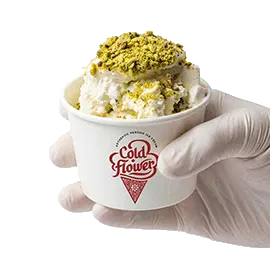
Shir Yakh
Sources
-
Hemming Jørgensen, "Yakhchal," Encyclopaedia Iranica, online edition, 2012, https://www.iranicaonline.org/articles/yakcal. ↩
-
"History of Ice Cream in Iran," Iran Chamber Society, https://iranchamber.com/recipes/articles/history_of_icecream_iran.php. ↩